The ZeRO-3 Diagram Most People Remember Is Wrong
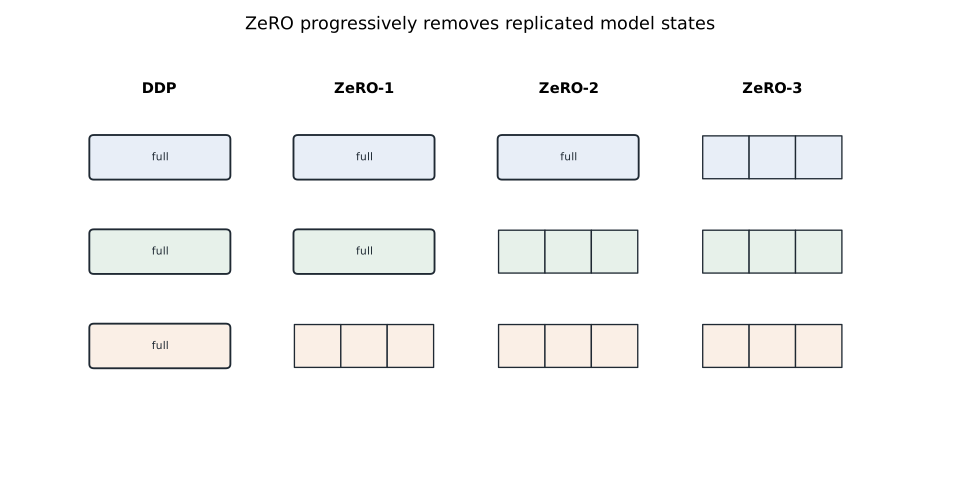
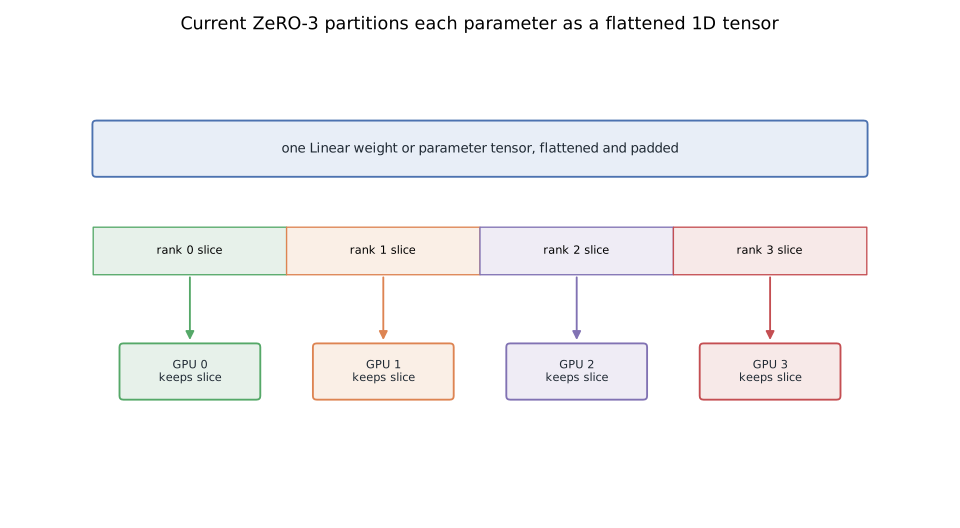
The ZeRO-3 Diagram Most People Remember Is Wrong Many engineers first learned ZeRO-3 from an animation that looked like pipeline parallelism. One GPU owned early layers, another GPU owned later layers, and the active layer block appeared to be broadcast to all other GPUs when needed. That picture is memorable. It is also not the right mental model for current DeepSpeed ZeRO-3 training. The current steady-state model is intra-layer partitioning. Each parameter is flattened, padded if necessary, and split across data-parallel ranks. Before forward or backward compute needs that parameter, ranks AllGather the full parameter. After gradients are produced, ranks ReduceScatter gradients back to the owning shards. That is the operational reading of ZeRO-3 from the ZeRO paper (arXiv:1910.02054) and the current DeepSpeed runtime. ...