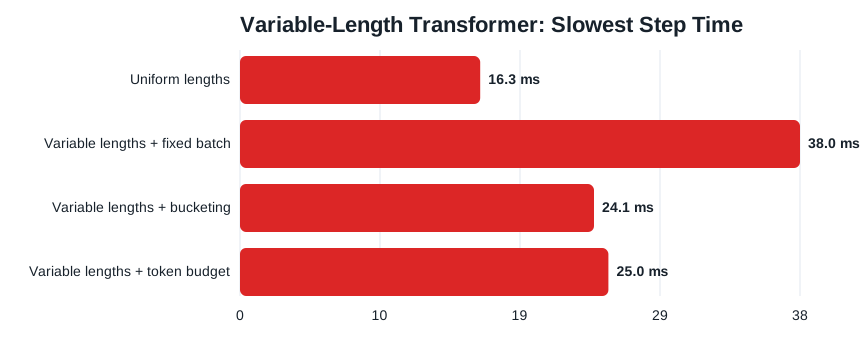
Step time under different variable-length batching strategies

Why Variable Sequence Length Breaks DDP Throughput

Why Variable Sequence Length Breaks DDP Throughput How to reproduce, measure, and fix token skew in transformer training with length bucketing and token-budget batching. TL;DR In transformer training, DDP can look balanced by sample count while being badly imbalanced by actual work. I built a small one-machine lab that uses a tiny transformer-like model with variable sequence lengths and four distributed ranks. The headline result was simple: uniform 128-token batches: 250,959 tokens/s variable lengths with fixed sample count: 122,006 tokens/s variable lengths with length bucketing: 208,668 tokens/s variable lengths with token-budget batching: 193,289 tokens/s The bad case was not a kernel problem. It was a batching problem: ...
March 12, 2026 · 8 min · Duo An
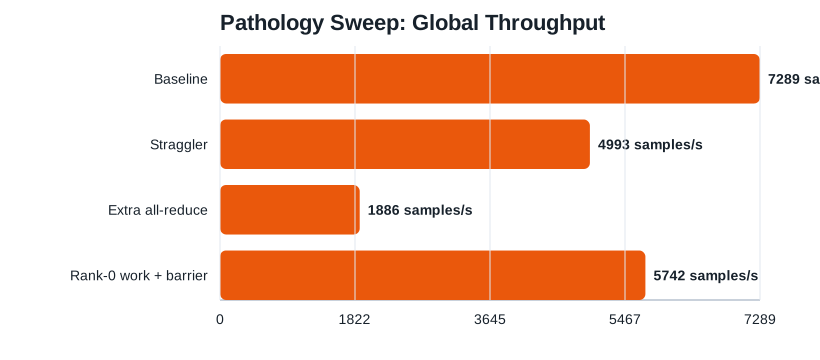
DDP throughput under straggler and communication pathologies

Learning PyTorch DDP Performance Tuning on a One-GPU Machine

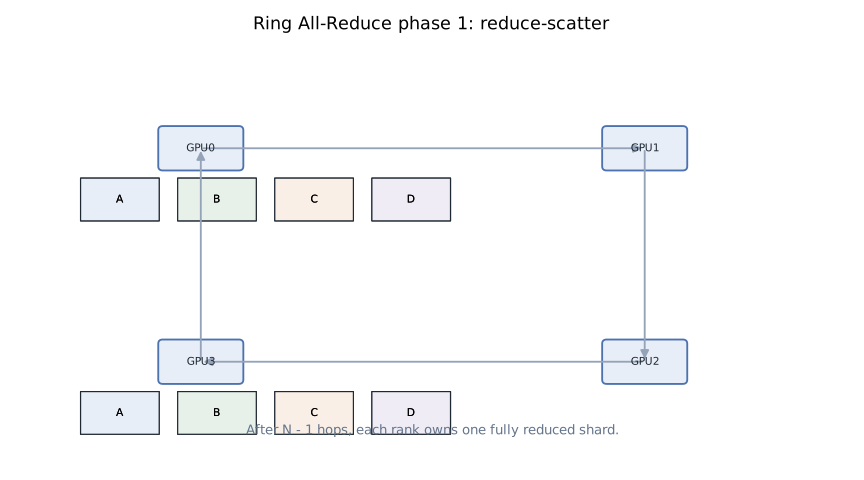
Learning PyTorch DDP Performance Tuning on a One-GPU Machine How to build real intuition for DistributedDataParallel scaling, stragglers, communication, and synchronization even when you only have one GPU. TL;DR Most DDP performance problems are easier to understand than they first look. In this post I built a small single-machine lab that uses CPU gloo processes to reproduce the part of DDP reasoning that matters most: the slowest rank often sets the pace small per-rank work hurts scaling communication can dominate step time rank-0-only host work becomes everyone’s problem once you synchronize The important numbers from the lab were: ...

February 18, 2026 · 15 min · Duo An